
By H. Max Ottesen
October 26, 2026 | Executive analysis
A public AI assistant can make government easier to navigate. But I would not judge it by how confidently it answers a question. I would judge what happens when the answer is incomplete, misunderstood or wrong.
Denmark’s new development project makes that distinction practical. It raises a leadership question for public authorities and for businesses building AI into customer service: can convenience be accompanied by a clear route to accountability?
What Denmark has actually announced
On October 21, 2026, the Danish Agency for Digital Government announced that Nine had been awarded a contract to contribute to a shared public-sector digital assistant and its underlying infrastructure. Borger.dk and sundhed.dk are identified as the first public websites intended to use it.
The project is to develop a first version providing general guidance across public services through generative AI, including chatbots. The agency says the assistants should draw on trustworthy public-authority sources. Its announcement describes development, not a completed nationwide deployment or proven improvements in citizen outcomes. The accompanying agency image is explicitly a preliminary concept.
Those are the confirmed facts in the announcement [1]. They do not establish that an assistant will make administrative decisions, that citizens already rely on it nationally, or that it has earned public trust.
The distinction I would protect
Guidance and a binding decision should be unmistakably different to the person receiving them.
Consider a hypothetical citizen asking what documents a service requires. A useful assistant might explain published instructions and point to the responsible authority. If the question turns on unusual personal circumstances, I would want an obvious handoff to a qualified person. This example describes a design test, not a verified feature of Denmark’s system.
A polished conversational interface can make a provisional answer feel authoritative. My concern is that citizens should not have to understand the technology to understand the status of the answer.
What I would ask before scaling
First, make the evidence visible. Show the relevant official source, make its date clear and explain uncertainty when the published material does not settle the question. A citation should help a citizen check the answer, not merely decorate it.
Second, design the human route before promoting the automated route. I would test whether someone can reach the right office without repeating an entire conversation or having to argue with a chatbot. Service accessibility should be assessed with people who have different language, digital and accessibility needs.
Third, assign ownership. Someone must maintain the underlying information, review recurring failures and decide when an answer or topic should be withdrawn. Responsibility should remain legible across the authority, supplier and service team.
Finally, measure the service rather than the conversation alone. I would want evidence about incorrect guidance, unsuccessful handoffs and repeat contacts alongside response times. These are my proposed evaluation criteria; the announcement does not report results against them.
What business leaders can learn
I see a similar management challenge in private-sector automation. A quick interaction is valuable only if the next step works. When an assistant becomes the front door to a service, the organization still owns the consequences of its guidance.
Denmark’s announcement is an opportunity to ask those questions early. It is not yet evidence that government automation has solved them.
Where would you draw the boundary between automated public guidance and a matter that requires a public servant—and what evidence would persuade you that citizens can trust that boundary?
Source and evidence limits
[1] Danish Agency for Digital Government, “Kontrakt om udvikling af digital assistent på plads,” October 21, 2026:
This article distinguishes the agency’s announcement from my analysis and hypothetical evaluation criteria. No independent citizen-outcome study or system performance data is asserted.
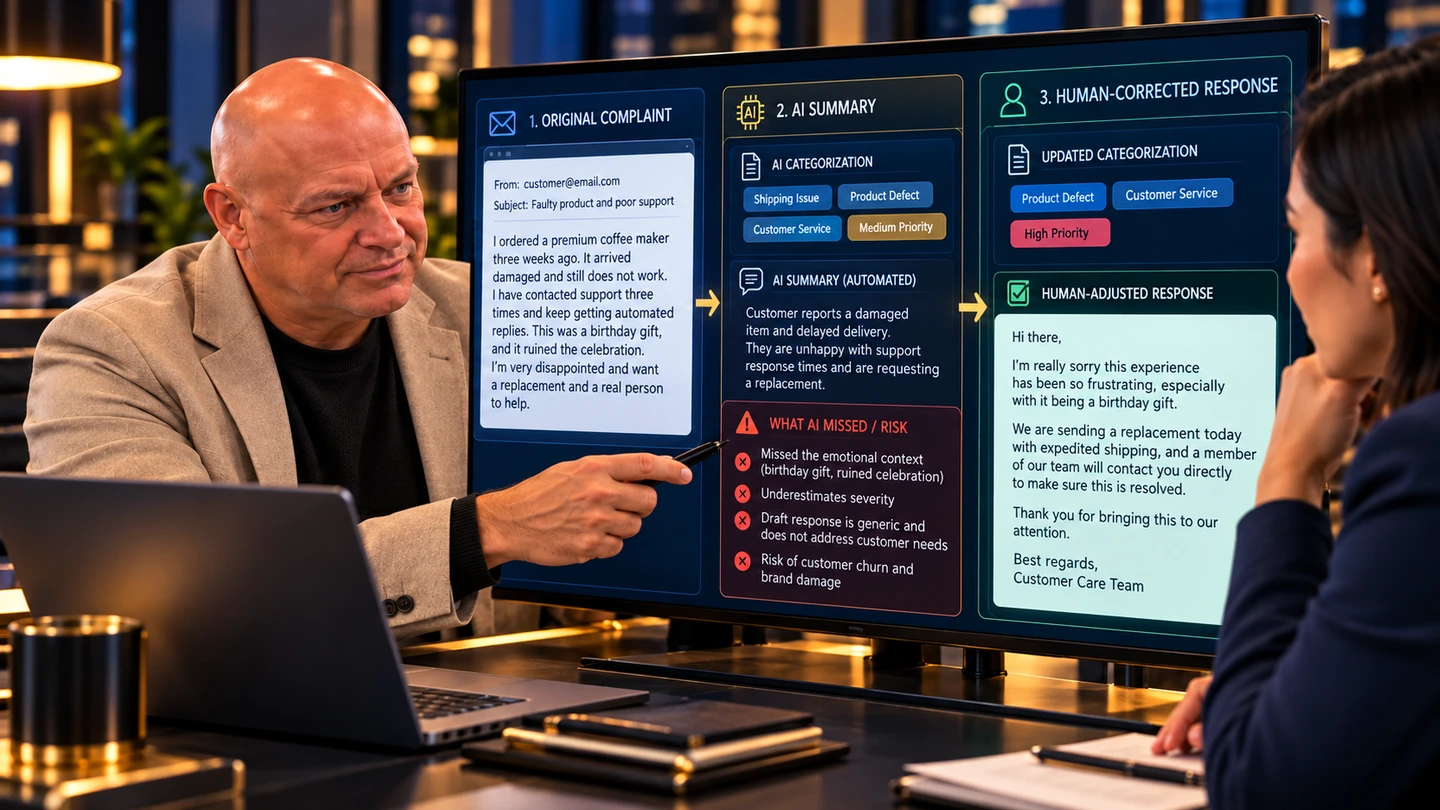
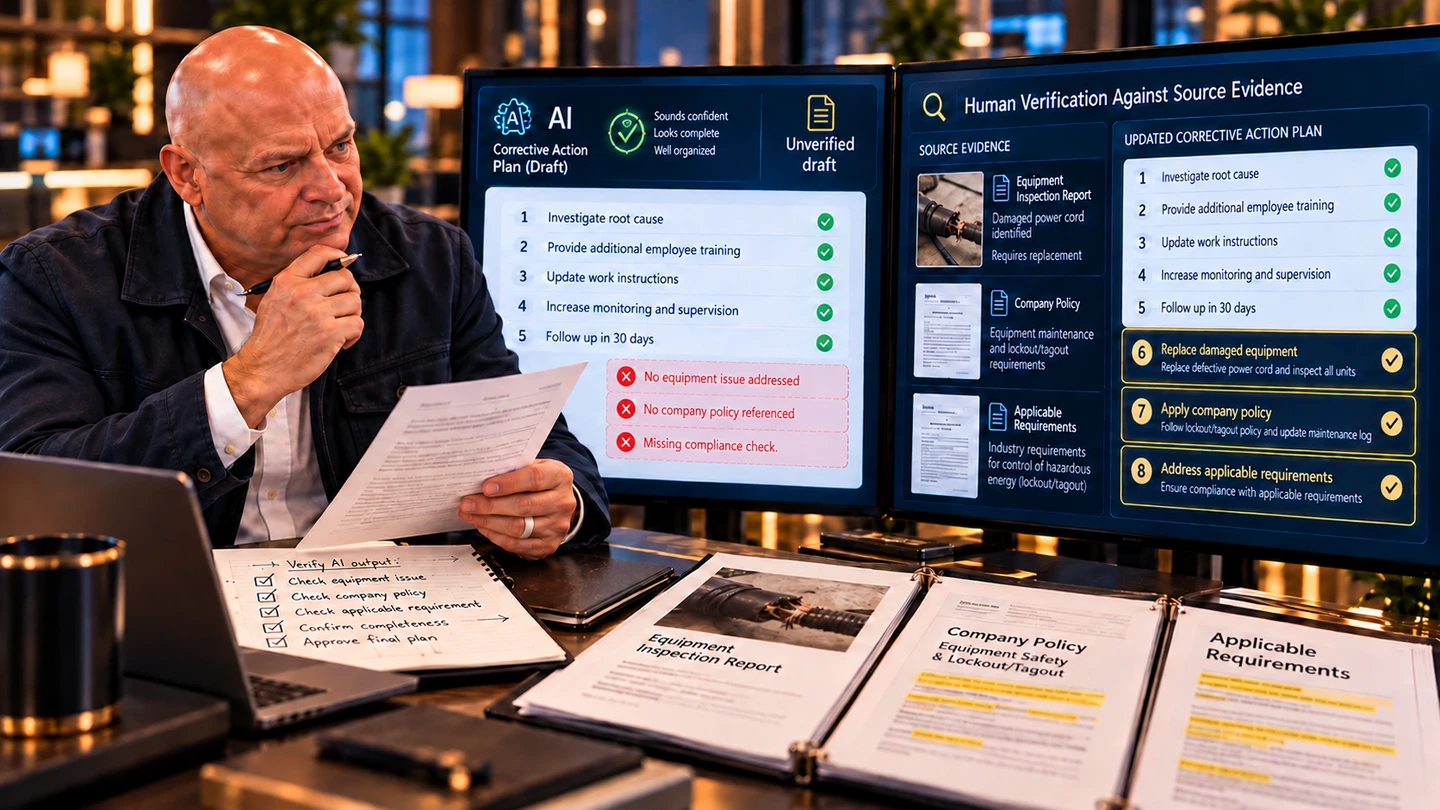
Cover: AI-generated conceptual editorial illustration. Fictional people and setting; not a photograph of the announced system or evidence of deployment.
© 2026 H. Max Ottesen. All rights reserved.